Should You Work for Free?

Talk about a loaded question. An argument as old as time; should you do work for free? Work takes skill, time, and energy, so is it ever worth volunteering that, whether it be for your benefit or the benefit of others?
It is definitely not as black and white as some people try to make out. We all have to start somewhere and not all value is determined by money, but does ‘exposure’ pay the bills? It absolutely does not.
Hopefully in this article I will try to give some guidance (at least from my experience and perspective) on when working for free is exploitation and when it is career acceleration. But let me first just acknowledge that for many people, working for free simply is not an option and that is one of the reasons why our industry is generally classist, as it is these passion projects the more affluent people in our society have the time and money to make that will often lead to the better career prospects.
As much as we can, we need to try and give paid opportunities, whether that be as a giant company or as one creative employing another, especially if those we are asking to join us are in lower-income situations or subject to employment prejudice. But does that mean you need to bankrupt yourself in order to make anything without a paying client? No.
So with that said, let’s dive in.
“Never work for free…right?”
We have all been told this at some point and for some situations it is 100% correct; you absolutely should not be ‘working’ for free.
Some scenarios to think about:
- A large corporation asks you to come film their event for ‘exposure’, an event in a building that probably costs £12,000 to hire with full catering and many highend aspects on display: These companies have money, and too much of it quite often. That fotage you capture? That is their money-making marketing tool for the next year. Perhaps this is different if you have absolutely nothing in your portfolio and you just want that one first piece of ‘work’ to put in your portfolio, but other than that, there is really no time this should be something you are doing without paid compensation, especially as in my experience, filmmakers and photographers are treated poorly at these events.
- Your best friend’s startup needs a video making: If the friend’s startup has investment, then really they should be offering you something (and in my experience, the less someone pays, the more demanding they will be, but not always). However, perhaps this friend might be willing to trust you to be more creative, with the caveat that they either pay you for your time and make a boring video, or they pay for actors and production design etc. for an exciting video that you control, but at the sacrifice of your wage. The hard-liners will say ‘well then you do option 1 or walk away’, but long-term opportunities are built on long-term friendships and trust. In this scenario, you have to do what feels right. I have filmed a talking head for my best mate for free because his business was brand new, amazing yet under-supported, and in need of some material. I helped another friend’s startup by paying everyone on the crew except me, as I had enough income from other work that I could forgo my fee and use that money to upscale the production value.
- A full-time job offers you a three-month unpaid internship as a trial period: Honestly, this one makes me angry. Internships should be paid. Who can afford three months of unpaid work?! And if you can, why do you need the internship? Trial work should be paid. In my opinion, even interviews should be paid or at least have expenses re-imbursed. If a company is offering you this, it will almost definitely result in poor treatment, high expectations, and no job at the end of it as they will just offer the same unpaid opportunity to someone else. I don’t even know how this one is legal and yet I have seen these jobs pop up time and again. Avoid them like the plague.
Okay…so when should I work for free?
The term ‘passion project’ generally implies it is a project you actually have a passion for (which is unlikely to be a corporate event I assume…). But making a passion project isn’t all fun and games; you don’t get paid, you have to squeeze it into your already busy schedule, and you will have to do a large bulk of the work yourself, so why should you bother making a passion project? As an aspiring filmmaker, there are plenty of reasons…
Whether you want to get into documentary, feature films, music videos, or simply grow to larger budget commercials, no-one is going to give you a chance until you can prove you can already do it. In fact, this is generally the golden rule for all employment in your entire life;
If you want a job in any sector, you will first need to prove you have already done that, not that you can do it.
Years ago, I thought that in order to grow in commercials, I needed to only make commercials. This was wrong.
There are two reasons I was able to transition from a solo videographer to a production company owner making much bigger projects. The first, yes, it did require me to focus on commercials. I started quoting clients for me to bring on an assistant, and as a result, the quality of work more than doubled. The second reason, though, was because I started making my own films outside of the commercial sector…
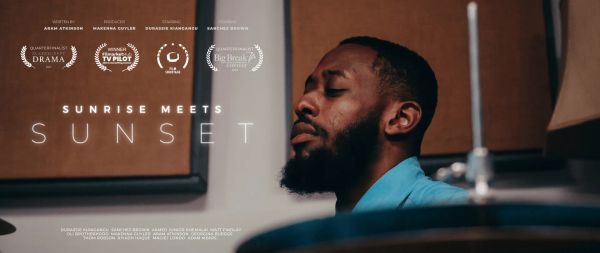
Over the course of my career as an aspiring film writer and director, I have made numerous passion projects, and almost every one of those projects has led to a paid opportunity of some kind down the line. When I quit my full-time job to go freelance, I was determined to use my newfound spare time to shoot the films that I wanted to make, not just the ones I was told to make, and as a result, I ended up making Fireflies a month after leaving my job. Fireflies won ‘Best Drama’ at the 2017 Rode Reel and as a result I not only won a whole range of useful equipment that helped set me up a little more in the early days of freelance, it also proved to be the deciding film in securing interviews and landed several paid gigs.
A few years later I made Frank’s Christmas (below), a short sustainability-based Christmas film thatwas a passion project and yet led directly to the Royal Navy job (also below).
The simple fact is that potential clients and agencies want to see what you bring to the table and the best way to do this is to create something of your own design.
Frank’s Christmas (passion project)
Made in the Royal Navy (paid commercial)
If you want to get into features and long-form, then it is even more important. If you honestly think for a second that Christopher Nolan or Barry Jenkins were paid to make their first short films that would eventually lead to films like Dunkirk and Moonlight, then you need to listen to their origin stories and stop taking advice from your accountant cousin who thinks passion projects are a waste of time (no offence to accountants). Chris Nolan learned many skills from his corporate work, but what built his reputation to where it is now is his own creative work.
“Okay, so there is a benefit of making passion projects in that it may lead to opportunities, but why else work for free? There is no guarantee, after all, that any opportunities will come from my passion projects?” I hear you say.
The Fastest Way to Improve Your Skills
Making corporate or commercial work is a fantastic way to hone your craft and start to perfect your lighting, sound, and camera ability, not to mention soft skills and producing aspects. It is also, however, very easy to fall into patterns when filming corporate or commercial work, relying on the same shots and set-ups over and over. Some of this is down to the work and what the clients want, but some of it is also down to fear of trying something new in a paid environment, after all, ‘if it ain’t broke, don’t fix it'‘.
Passion projects offer you the space to try something new, whether it’s in the writing, the cinematography, the edit, or any other part of production. It is the passion projects that will help you to improve your skills and find your own creative identity because you have the freedom to experiment and try things that the corporate and commercial world are too afraid to pay for without the proof of its success.
Even in Christopher Nolan’s early work, you can see his high-concept ideas beginning to come through, playing with circular ideas as he still does now. You don’t have to go do something completely different and experimental, you may just want to try writing and shooting a simple dinner scene, but whatever you choose to do will offer you challenges and freedom that paid work is far less likely to provide.
Connections
As much as we may try to do a hundred jobs by ourselves, film is most successful and enjoyable when it is a collaborative effort, which means you need to have a network of people around you who support what you are doing, and that you are eager to help in return. When done right, connections lead to opportunity.
People want to help.
Every connection is an extra branch in the tree of opportunity for your career, you never know who is connected to who and where recommendations may lead you; there are an infinite amount of roles on a filmset that may pique your interest, many completely alien to even the most experienced filmmakers out there, such as Breakdown Artists who are responsible for aging clothes and adding the blood and dirt to costume when needed. Any chance to network and learn about the industry can open doors and build your knowledge.
For every connection that helps you, though, it is important to return the favour, and passion projects are a great place to help foster new talent and give opportunities to those who may not always get them so readily. I met a female sound recordist on a recent passion project I was helping out on and we got on like a house on fire, who I can now recommend to clients and other filmmakers as I would love to see a more diverse film industry, as I’m sure we all would.
There is another filmmaker who grew up near me and since becoming friends in our late teens/early twenties, we have helped out each other in just about every role you can imagine (seriously: cam op, soundie, DIT, 1st AD, van driver, BTS photographer…). Both of us have made a number of passion projects and in doing so built a wider collective network of cast and crew, who we now prioritise to try and get paid work with or for in return for their help on our projects. This one particular filmmaker and I have over the years effectively worked in an unwritten agreement that no matter what, we will be there for each other on our projects if we can be, paid or not. This sort of friendship and collaboration has mental health benefits beyond words, to know there is someone else who is fighting the fight with you and a complete understanding and alignment of goals.
Just remember, if you can afford to pay people, maybe you should, especialy if those helping you out do not have the same luxuries that you do. Always be mindful of everyone’s situation and remember that no matter how important your passion project is to you, that does not mean it has to be valued with the same gravitas by anyone who helps you. I have witnessed (or been victim to) a couple of directors getting so absorbed in their own projects that they end up treating their volunteer team with a lack of gratitude and unrealistic expectations.
Pride
If you could have an award on your shelf for a corporate video or a short film you wrote and produced, which would you be most proud of?
I spent four years contemplating, conceptualising, outlining and writing a TV pilot screenplay, which meant a lot of late nights and frustrating days bashing my head against a wall with no large cheque waiting for me at the end. I had people telling me it was a waste of time, I had others laugh at the idea, and I had my own many doubting voices, and yet, in 2021 it won Filmarket Hub’s UK screenplay contest. It was the defining moment in my career up until that point, it was the achievement I and my family were most proud of and since then it has embedded a confidence into my storytelling and gateway into many new doors and conversations.
This is not to say your paid work can’t also give you huge pride, my time working at the RNLI charity fills me with great joy and many projects I have done in paid positions have left positive imprints, and if you are happy and proud of your paid work and don’t have a deep unrelentling voice in your head saying ‘but I want this instead’, then maybe you do not need to make passion projects for free.
It can be incredibly difficult to pull everything together for a passion project, they are not always going to be a success (I have a few mothballed projects in the locker), but each attempt is going to be an educational and hopefully rewarding experience, and at the end of it, it just might be the best choice you have ever made.
So be careful not to be exploited. Make sure any passion projects you join for freeare for people you trust and where you have the opportunity to gain skills or connections, and make sure any passion projects you produce does all it can to support and provide for those involved, and make an effort to look outside of your network of ‘yes people’ who have the privilege of volunteering their time. There may be someone who needs this more than them and if you can find a way to get them involved, it might just change both your careers forever.
Now go make that passion project.