Are Film Degrees Worth it?
As someone who studied film at university and hated it, became a commercial filmmaker, a BFI-funded writer/director, and now teaches film at a university, I feel pretty uniquely placed to answer this question. Or at least attempt to…
If you want my short answer, it’s this - you do not need a degree to become a successful filmmaker; some of my closest collaborators never went to university or film school and I wouldn’t trade them for the world. BUT! There are some significant and undeniable benefits about going to university if you approach it correctly, and it has not been as easy for my non-degree friends as you might like to think, and as we enter the dawn of A.I., reducing the number of jobs likely to be available across all industries, it might be more important than ever to have to have a degree.
However, not all degrees are made equal and there are some key things that make or break a ‘worthwhile’ film degree. In this article I’ll explain the most important factors to be aware of before you decide to film school or university, as well as which one to go to.
Knowledge Gained
The undeniable, unavoidable, and possibly uncomfortable truth is that this answer depends entirely on one factor; the staff.
One of the reasons I disliked my own university days so much was that despite having amazing theoretical lectures, the practical side of the course was atrocious. I felt like every single practical skill I had at the end of my three years (and I wouldn’t say I had a huge amount in truth) had come from me teaching myself, not from the lessons I was paying thousands of pounds for. The only exception was when we had a cinematography lecturer for 6 weeks who was a working professional and had real-world and up-to-date knowledge, but he was gone as quickly as he arrived sadly.
When I look at the knowledge and skills I have now when it comes to writing, directing, producing, cinematography, sound, and editing, I would say only about 0.5% of that is from what I learned at university, compared to the 99.5% I have learned from working in the industry. This is actually why I wanted to start teaching; I wanted to make sure the students of today are better prepared for the industry than I was. That’s not to say my degree was a complete waste; the theoretical lessons where we would study film genre and aspects like mise-en-scene definitely embedded themselves deep in my brain and I am thankful for those insights, even if at the time I would rather have been out shooting wit a camera, but we are talking about 50% of my degree essentially being a void for what I had hoped.
Time have changed though, ‘to some degree’ at least. Around the UK (and presumably the world) there are many phenomenal filmmakers who also teach at universities, people like Loran Dunn in Manchester or Riyadh Haque in Portsmouth, and if you are lucky enough to be one of their students, you will have a direct link to some of the rising stars of tomorrow who are imparting their knowledge with you.
Whilst you can never guarantee the staff you meet at a university open day or see on a university webpage will still be there when you start months later, deciding on a film degree because of who is teaching there is one of the smartest moves you can make. Look into the teaching staff’s work, see what others have said about them and if you can, try and ask current students directly. And look further than the academic staff; one of the technicians at the university I work at is an incredibly talented animator who was nominated for a student BAFTA and studied at NFTS! The point of universities is to be a hub of knowledge, so you want to find the best hub you can that is filled with the richest pool of wisdom.
I, as a lecturer, try to share every single piece of knowledge I have in a way that everyone can understand, hoping to remove all of those gatekeepers and barriers of entry, but if I am being honest, all that knowledge I possess has come from years on sets, not years in a university classroom, and that brings me back to that uncomfortable truth; a lot of this knowledge can be gained elsewhere for free (or even whilst being paid).
Outside of university there are countless working filmmakers, affordable online courses covering topics from 16mm to intimacy co-ordination, and there is the greatest free university ever created - YouTube. It takes a proactive attitude to find these areas of knowledge and utilise it, but it is there. But the one thing these other sources don’t provide that a university teacher can is direct feedback on your work.
The biggest benefit of having a teacher you trust is that you have someone who can help you refine your ideas and discuss each unique situation you face. The other benefit is you have someone to go to when YouTube doesn’t have the answer (or it has too many answers and you need one piece of advice, not 100 conflicting pieces of advise).
So when it comes to the first factor, knowledge, does it make sense to go to university? Is a degree worth it for the knowledge? It depends entirely on the staff, in my view.
Yes, a degree is worth it for the knowledge alone if you have great teachers, but if you do not have industry-working teachers who are teaching you real-world and up-to-date knowledge on topics ranging from technical to ethical...it might not be in truth.
Let’s look at category 2…
Experience Gained
I would define experience as those first-hand moments where something goes really great or really terrible and you learn from it. Experience is not something you watch, but something you do. For example, I am experienced now with 16mm because every year I have to load and unload 16mm cameras multiple times when showing film students how to load, operate, and light meter 16mm film.
This is where not doing a degree might work in your favour.
A lot of a film degree (or at least the one I teach on) is practice-based, but there is also an equal amount of lectures and theoretical knowledge presented. These are incredibly important, where I might be explaining things like crowd-funding or writing characters, but if you are the sort of driven person I presume you might be if reading this, then you can gain just as much experience if not more by just doing the damn thing.
Going back to my previous section, most of my knowledge came through industry work, well so has most of my experience. Yes I did shoot films at university, but often in groups where you might have limited input or hands-on time. Nowadays, cameras and lights are infintely more accessible than they were 15 years ago when I went to university. I always tell my students that making films isn’t something you only do at university, it is something you should be doing in the summer too and outside of the course, because that is how you learn the most, or at the very least it is where you run into the problems that informs what you need to learn next time.
I will counter this by saying if you are not super proactive, then being at university may give you more experience as you are forced to make a number of films each year in a variety of roles, and you also build a network of filmmakers who might invite you onto more projects outside of university, but it ultimately always comes back down to you.
The two film projects I remember learning the most from during my spell at university were actually projects I did outside of university with filmmakers from my hometown and college friends, one being a short film I wrote and direct (that hugely helped me land my first full-time job) and the other being an awful feature film that I shot as a DOP, which taught me the importance of walking before you try to run.
So, is the experience you gain from a film degree worth it? Not as a defining factor. If you are someone nervous and shy, it might be the environment you need to push you into having those experiences as you will definitely get experience during your time at university, but whether you go or not, the crucial thing is how regularly you make films off your own back. So I would consider this a plus for taking a film degree, but if you decide not to do a degree, you can get the exact same experience from simply working in the industry.
Access to Facilities & Equipment

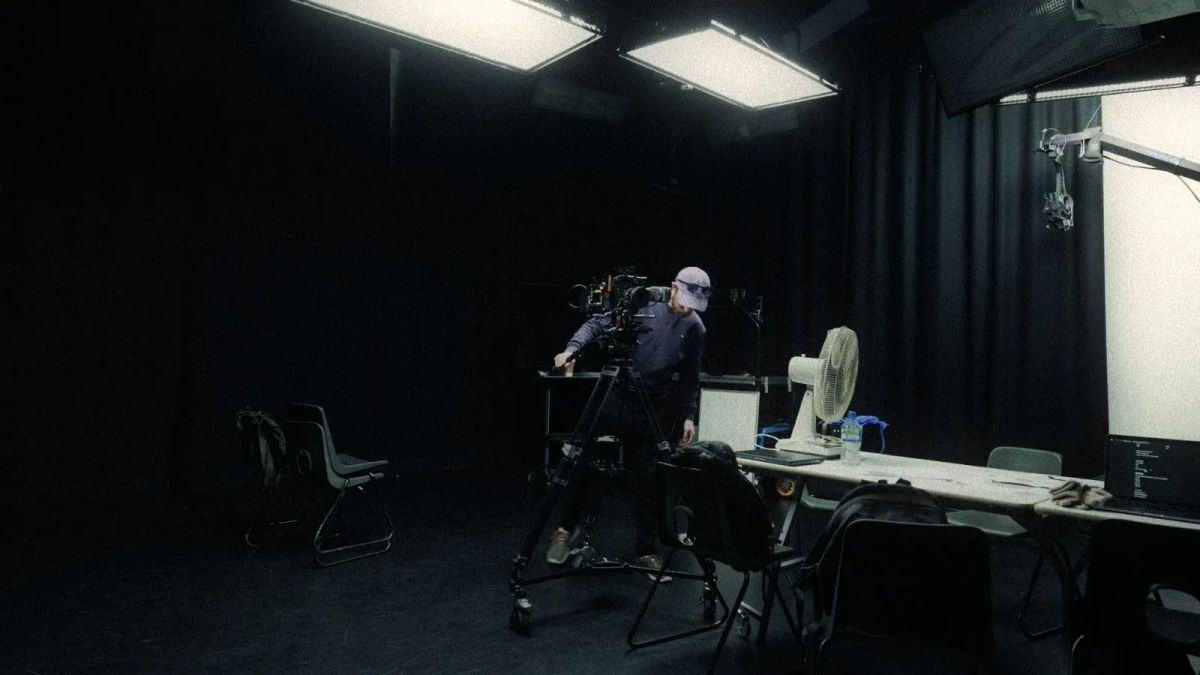
This is where universities really shine. Sure, you are paying £9000+ a year to be there, but it would easily cost you far more than that to hire most of the facilities and equipment for a fraction of the length. Where I teach, there are two professional studios, sound booths, equipment ranging from ARRI minis to 16mm cameras, Mixpre 6 devices, HMI lights…there is a lot.
Here’s a quick cost comparison. I went onto a London kit hire website and built up a quote of the following kit (and this is not even considering things like the cost to hire a studio space or insurance).
University Equipment Cost for 3-days
- Arri Mini kit + WCU4
- Arri Ultra Primes (5 lenses)
- Mixpre 6
- Sennheiser 416 microphone
- Sennheiser G3 radio mics
- Timecode device
- 1x Aputure 600D + softbox
- 4x Pavotube
- 3 C-stands
- (Cheap) wireless transmitter
- Crane£0
Hired Equipment Cost for 3-days
- Arri Mini kit + WCU4
- Arri Ultra Primes (5 lenses)
- Mixpre 6
- Sennheiser 416 microphone
- Sennheiser G3 radio mics
- Timecode device
- 1x Aputure 600D + softbox
- 4x Pavotube
- 3 C-stands
- (Cheap) wireless transmitter
- Crane£7147
When you look at the hard numbers, it is hard not to see a clear winner here. I hear you saying ‘well you can’t access that equipment for weeks at a time’ or ‘yeah but it’s old and damaged and not enough to go around’ or ‘I’m paying £9000 a year, there should be 10 ARRI minis not two’, but those arguments dont even come close to justifying the cost comparison. £9000 a year means you can access a wide range of equipment and facilities for three years and even if there are some issues, there always will be. I’ve rented things from kit houses many times and I’ve yet to have a perfect rental experience where something doesn’t get missed or isn’t working as expected. And the benefit of using equipment that may well-used by other students is that there is also a bit more understanding when you are the one to damage something compared to a rental house that may charge you a lot of money for that damage.
If you are still sat there thinking ‘for £9000 a year I expect more, MORE, MORE!’, then I will gently point out that your £9000 doesn’t go directly to the department to spend on equipment. In fact, it doesn’t really go to the department at all. University departments have to bid for money to purchase new equipment and there are many other costs that universities must cover including staff salaries from the teacher to the security guard, building maintanence, library resources, software subscriptions, repair costs from the many items that get broken or lost, university services like counselling, and so many other aspects to running a university. Your £9000 a year is for all of that, not just buying more lighting.
On the topic of lighting, when it comes to assessing a university’s kit options, I would absolutely look closer at the lighting than the cameras. Of course you want to try all the fancy cameras from REDs to ARRIs to Blackmagic cameras, but you or others on your course may already have your own camera and lenses, but probably not big lights and heavy C-stands and lighting is the steepest learning curve for budding cinematographers. For a reality check, our most advanced camera when I was a student was a Panasonic AF101 and the Canon 5D mark ii was for photography students only.
So are film degrees worth it when it comes to access to facilities and equipment? I would say without a doubt this is a strong yes. Perhaps not every university has the best equipment and facilities, but a lot out there will have a great range of options for you. It does mean though that you actually use the equipment when at university, even if you think your own camera is better. You can use your camera any time, but capitalise on your time at university so you can leave feeling confident operating numerous cameras, lights, and studios etc.
Network Built
This is much like the ‘knowledge gained’ response; it depends who else is at the university, both in terms of teachers and and fellow students. If you have a standout teacher and you can foster a great relationship with them, show them that you work hard, there is a good chance they will bring you on sets and you will quickly elevate your industry opportunities; I have brought on about nine of my students onto professional projects over the years, but that is nine out of about 350 students I have taught. That’s why you should not put your hope of building a network into the teacher, but more so all the other students attending the university.
Me personally? From all the other students who were on my course at university, I am only in touch with five of them still, and of those five, only four are still in film. They are great friends and filmmakers, but my all of my closest collaborators either went to another university and I met them on a film set, or they didn’t go to university at all and I met them through instagram. I have, however, seen students become friends, form companies together, and go on to make incredible pieces of art. Look at Barry Jenkins and James Laxton who met at film school and went on to make Moonlight!
Building networks is crucial in film, possibly more than any other industry, where so much of your career rests on your reputation and creating long-term working relationships with various filmmakers. When you go to university, you are put in a room with maybe 60 other filmmakers, but you also have all the other filmmakers on the degree, and most likely your university will also have a fashion course, an art course, an acting course, a music course.
There are over 20,000 students at the university I teach at, studying courses ranging from business to animation. 20,000! And these are people from all over the world, all trying to kickstart their careers and build networks. I definitely didn’t make the best use of this when I was a student, in fact, I was very introverted and struggled to make friends back then, but if I were to go to university now, I would be making friends with students on as many courses as I could. One day, those geography students or aeronautic students will need a videographer for a project, or you might want an expert to film for a documentary.
So is a degree worth it for the network alone? Yes, if you are prepared to go out and meet new people. Does this mean you won’t build networks if you do not go to university? Of course not, your networks will grow and strengthen through industry work, but it will be very hard for you to ever be in a place of 20,000 people all at the same life stage and where you have an easy excuse to talk to them.
One piece of advise regarding networking; don’t try to network ‘up’, i.e. with people far more experienced than you. Try to network ‘across’, with people you can collaborate and build long-term working relationships.
Work & Graduate Opportunities
Some degrees have work placements, field trips, graduate pathways…some do not.
Some degrees bring in guest speakers, will arrange connections and post job opportunities…some do not.
The Higher Education landscape right now in the UK is looking dire to be truthful; all degrees at all universities are having to cut back on budgets so many of these opportunities are being reduced, but no matter the opportunities that come up during your degree, having a degree will lead to more opportunities outside of university.
I never judge a filmmaker based on if they have a degree. I look at their work, their attitude, and their goals, and very quickly you will get an idea of who they are and if they are a good team player. But many companies out there do judge you based on if you have a degree. A.I. has already been deployed in recruitment, meaning if your CV/Resume does not include a degree, it might be disgarded before a human has even read it.
I have friends who are more skilled, capable, and hard-working than 99% of the population, but they do not have a degree and therefore have been overlooked by jobs that they would absolutely nail. It is heartbreaking and infuriating. The way companies recruit is a conversation for another day (as it opens a big can of worms) but it is likely to unchange in this regard any time soon, because a degree tells an employer one thing; ‘this person can commit to something for three years, hit deadlines, and reach a goal’.
Chances are, you do not need a degree to open doors in many areas of film production, but what does open doors is having a strong portfolio and what allows you to have a strong portfolio is lots of experience and projects. My first job at the RNLI laid the foundation for the filmmaker I am now; I got to shoot, edit, record sound, plan shoots, and camera assist 5 days a week, travelling around the British Isles and other parts of the world learning how to improve my skills whilst also getting paid. There is nothing wrong with full-time employment as a filmmaker, in fact, I actively encourage students to embrace it in the early stages of their career to build their network, knowledge, experience, and access to equipment.
Unfortunately, this is the one area that having a degree becomes a real deal-breaker at many companies. Yes, you can still get full-time work without a degree, but the number of companies who will consider you drops significantly.
So is having a degree worth it for the work and graduate opportunities? Right now in the UK at least, possibly not during your degree, but in three years time when you enter the workplace, almost certainly.
Personal Development
Lastly, personal development. How much do you learn about yourself at university? How much do you grow those ‘soft skills’ like teamwork, problem-solving, and accountability?
I don’t think I grew much personally at university, but those years definitely account for a profound part of my identity now when I think about my ability to get through difficult times. I found university tough, isolating, and generally an unhappy place to be. That was my experience, for many others it is the complete opposite. No matter what though, you do tend to learn something about yourself (and others) at university.
At universities, you have to work in teams with people you would never otherwise cross paths with, and group work is always the most challenging aspect of university programmes. You must learn to compromise, support others, negotiate ideas, and work as a team to achieve a single goal. Equally, you will have individual assignments like writing CVs and portfolios, which require discipline.
Do you learn these skills outside of university as well though? Absolutely you do. Do I think I would have learned the same lessons elsewhere if I hadn’t gone to university? Yes I do. The difference is at university it is your grades and class reputation that is at stake, but if you learn these personal development skills on the job, then it might be your career and industry reputation at stake. That said, many of the problems you face at universities simply do not exist in the film industry.
If you enter full-time employment as a videographer in a company, you will still be met with people you don’t necessarily click with and group projects that cause friction, but in the freelance world of filmmaking, a unique paridise exists. As a freelancer, you live and die by your reputation, which means that when you find people you like to work with, you work together again and again and often become best friends. It is truly incredible that every day at work as a freelancer tends to be a day with your best friends as well. If someone doesn’t pull their weight or is not pleasant to be around, chances are they won’t be on the next job, so very quickly your team refines itself into a beautifully functioning machine that also feels like you are cheating at life. So in some ways…some of these development areas you learn at university sort of fizzle out when working in the film industry because they are not needed.
Do not get confused though, I am not saying that you should downplay the importance of learning about yourself and there are many areas for personal development outside of group work and individual deadlines. The aim of university is to enter as a young adult phasing out of childhood and exit as a mature young adult phasing into the next chapter of your life. My bigger point here though is that many of my best friends who have not gone to university, are the exact sort of well-rounded, mature, wonderful people that I enjoy to hang around with. At no point have I ever thought ‘if they went to university, they’d be a better more personally developed person’.
So is university worth it alone for personal development? I don’t think so, but the key bit here is it is personal. You may think it is and that’s totally fine.
No matter what though, whether you go to university or not, to work in this industry you do need to be organised, especially as a freelancer, something you can learn how to do in this article.
So in conclusion, are film degrees worth it?
It is totally dependent on who you are as a person. You can 100% become a phenomenal filmmaker without doing a degree, film or otherwise, and if you are driven and have the right attitude you can make quick strides in the industry where you will learn lots. That said, there are undeniable advantages in some regards and film schools have a very well-earned place in society.
I will end this article by saying that A.I. is going to throw up many new challenges in the coming years, and having a degree might be more important than ever in the years to come, no matter what the degree is. Remember that three years is not actually that long in the grand scheme of things, and even if you start a degree and do not love it, I would see out those three years so you can move forward with a degree.
Did I like my degree? Not really, no. Do I regret doing a degree? No. Perhaps in hindsight I would have picked another university, another course, perhaps another subject altogether but then I wouldn’t be the person I am now. At the end of the day, if you do you research into the staff, course, and university, then you should be able to find something that works for you. But equally, if you decide not to do a degree, whilst there may be challenges for you in full-time employment, there are many filmmakers out there in the industry like me who won’t care in the slightest, as long as you have the right attitude; be a hard-worker, be polite, and be punctual.