Protect Your Mental Health as a Filmmaker
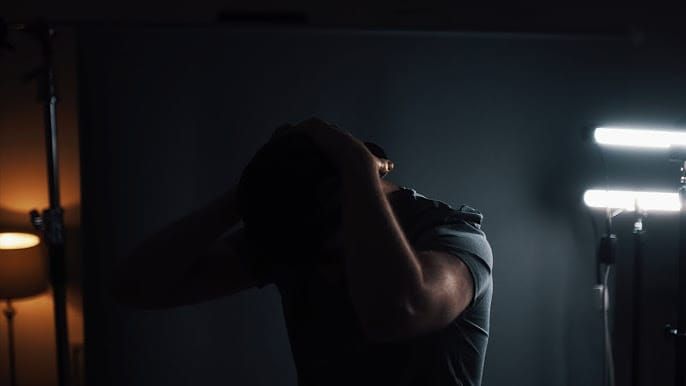
We protect our camera gear, our screenplays, and our local film awards sat on the bookcase, but are we doing enough to protect our mental health as freelance filmmakers?
Now let me firstly just state that I am not a mental health expert. If you need serious help, then you should talk to someone who is qualified to do so (I've left a bunch of links for you at the bottom of this article).
With that out of the way, though, let’s get into the four lessons that have helped me protect my own mental health as a freelancing filmmaker.
1. Don’t Pour Your Emotional Energy Into Every Project
I understand; film is our art, it is a part of our identity that is so deeply rooted in us, that it often feels like it is our identity. But sadly, if a client won’t budge on their decision to use the worst music of all time under your beautifully shot advert, then you’re going to have to accept it. They are the ones paying you after all. However, you have to ask yourself, ‘would my mental health be better if I hadn’t become so emotionally invested in the project? And would the project be any worse for it? ’
By being able to identify which projects deserve your emotional energy and which ones should be treated as a ‘job’, will save you hours of teeth grinding. It is very hard not to pour your soul into your work, even if it is something that you know isn’t going to make it onto your website, but learning to limit how much you care on certain projects can turn bitter and frustrating experiences into enjoyable paydays, and often leads to healthier client-supplier relationships.
We are all susceptible to letting our inner demons out when we feel like our art is being criticised, but being defensive and confrontational rarely creates the environment for positive change in the future, if anything, it just entrenches the creative divide.
How do you do that then?
The Pareto Principle, more commonly known as the 80/20 rule, is a useful way to set some boundaries at the start of each project. Chances are that whilst every project you take on deserves 100% of your attention and effort, 80% of your paid work probably only deserves about 20% emotional investment, and only 20% of the films you make probably warrant 80% of your emotional investment.
Here are some questions you can ask yourself to decide:
- Is this delivering a message I want people to associate with me, or is it ‘just another ad’ for something I don’t actually care about?
- Will my input be appreciated and recognised after the project is finished, or will my name be stripped off every platform it sits on?
- Am I making this with a team of like-minded creatives that appreciate me as a person, not just a filmmaker?
Save your mental strength for the projects you truly want to make with the people you love to work with - everyone comes out happier for it.
2. Prioritise Your Physical Health
“I’ll join that gym when…I’ll start running when…I’ll get a standing desk when…”
If you are a self-shooter or work in the camera, grip, or lighting department, then it is highly likely you suffer from bad posture and back problems from lugging heavy gear around all day. If you are a producer, writer, editor, sound designer, or just about any pre/post-production creative, then it’s likely you also suffer from desk-related pains and a lack of vitamin D. But what’s physical health got to do with mental health?
There are countless studies that cover the huge benefits of physical exercise for mental wellbeing, and yet it can often fall down to the bottom of the to-do list. One study proved that physical exercise can relieve stress, have a positive effect on self-esteem, and have a positive impact on our moods, stating that:
“Low-intensity aerobic exercise – for 30–35 minutes, 3–5 days a week, for 10–12 weeks was best at increasing positive moods.”
— Reed, J. & Buck, S.
Get outside
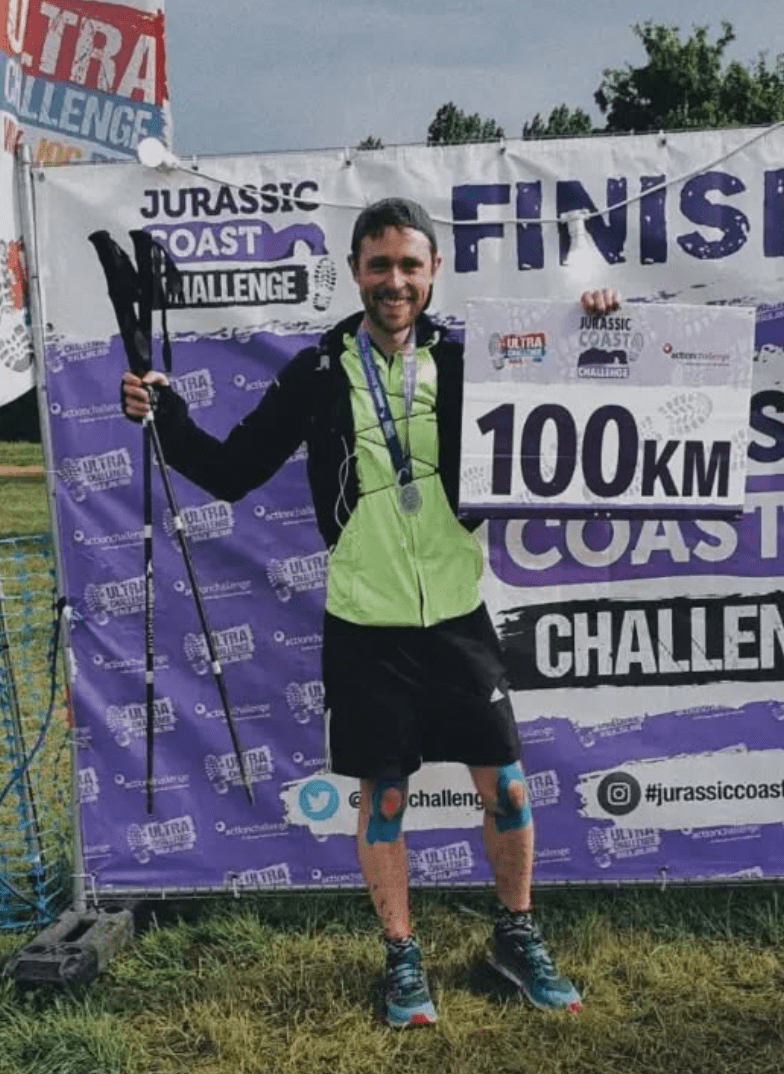
Looking after your physical condition is imperative to sustaining a long career in such a physically demanding job, as well as leaving you with enough energy to enjoy a happy life outside of work. Getting outside will give your eyes a rest from the screen, something we all need to do more of, and also increase your vitamin D intake, which is not only important for your bone strength but also helps fight off depression.
The world has definitely made huge strides in mental health awareness over recent years, but more can always be done, and it is telling that many of us in the film industry prioritise working over even just 30 minutes of fresh air. We know it isn’t always as easy as ‘just go for a run’, but even standing or sitting on your doorstep with a cup of tea will do wonders for your mental health, as well as help you gain some clarity on whatever it is you are working on. As a talented collaborator of mine once said, “When you are in the problem, you are not on the problem”.
The work we do requires us to be problem-solvers, manual labourers, and long-haul drivers, sometimes with tragic consequences. By improving our self-esteem and confidence through physical exercise, we can better assess the decisions we are asked to make, and build a safer industry that understands the very real risks of performing these actions, let alone without proper training or support.
Every single one of us, from make-up artists to set designers, suffer from a severe lack of sleep thanks to the punishing hours of film production, yet we do it because we love our jobs. What if we could build an industry where we get to do what we love, but also get a full 8 hours sleep every night? Find time to go for an evening swim? Be there to tuck our kids into bed?
By improving our mental health as freelancers, we can build an industry of confident film crews that know where to draw the line and keep our industry evolving for the better.
3. Learn to Say No
One of the hardest things to learn as a freelancer is how to say no - it may be to your clients, your friends, or your own impulses, but if you say yes to everyone who demands your time, you’ll find yourself saying no to the people you take for granted; your family, your partner, and your own goals.
Not having a guaranteed salary at the end of the month can compel you to say yes to every opportunity that comes your way. When you start out, that makes a lot of sense, but the mindset tends to outstay its welcome, even once you have gained a solid pool of clients. It can take years to learn how to say no to clients, and even when you do there will always be that worry in the back of your mind that they won’t come back, but the perks of freelancing (travel, control of your schedule etc.) will only exist if you let go of that fear and prioritise your own goals.
Some reasons that justify you saying no;
- You want a holiday
- Your family needs you/you have family plans already
- They treated you poorly on previous projects
- You don’t agree with the ethics of the project (any decent agency will understand this if you explain why, whilst direct-to-client might be more awkward)
- You are ill
- You need a break for your mental or physical health
FOMO is prevalent in the freelance world, and it will push you to say yes when you really know you shouldn’t; true friends will understand that just because you are filming in their city doesn’t mean that you want to hit the town after a 12-hour shoot when you have an early start the next day (although I did do that on one occasion). The truth is though, that you may miss out on the goals you truly want to reach, if you say yes to every ‘opportunity’ that comes your way.
Define your deep desires that the freedom of freelancing can allow you to chase, such as shooting your first feature doc, or doing that weekly Tuesday pottery class, and treat them as if they are a paid job that you cannot cancel. You’ll soon realise that by saying yes less to the desires of others, you will be able to say yes more to the goals of your own.
4. Talk to Others
You were probably expecting this one, but it is so important. Many parts of freelancing can feel isolated and scary, when in fact there are countless talented and kind filmmakers out there who want to help or are going through the same thing. Don’t believe it? Ask literally anyone about imposter’s syndrome…I’m feeling it even writing this article right now!
No one understands the frustrations and difficulties of freelancing as well as another freelance filmmaker, in fact what we do can seem completely alien to our friends in full-time employment, and that’s why building a strong group around you of people who can offer advice or comfort is invaluable.
At the end of the day, being a freelancer is an amazing and incredible experience that provides you with the opportunity to create the lifestyle you have always wanted for yourself, but don’t forget to look after yourself in the process. Equally, if you see others struggling, don’t be afraid to ask them how their mental health is. It may feel uncomfortable to be so candid and direct, but to the other person, it might be the one question they have been desperate to receive. One suggestion, taken from a former AD, is to ask ‘how are you really?’ after a response to ‘how are you?’
Sometimes it is the simplest solutions that are the most effective ones.
If you are really struggling with your mental health, then check out some of the links below that can offer further advice on where to seek help.
Take care!
Mental Health Links
https://bectu.org.uk/article/creative-industries-mental-health-support-and-guidance/
References
Gracious, B.L., Finucane, T.L., Friedman-Campbell, M., Messing, S. and Parkhurst, M.N. (2012). Vitamin D deficiency and psychotic features in mentally ill adolescents: A cross-sectional study. BMC Psychiatry, 12(1).
Mental Health Foundation (2018). How to look after your mental health using exercise. [online] Mental Health Foundation. Available at: https://www.mentalhealth.org.uk/publications/how-to-using-exercise.
Reed, J. & Buck, S. (2009). The effect of regular aerobic exercise on positive-activated affect: A meta-analysis. Psychology of Sport and Exercise, 10 (6), 581–594.